Case Study: Lily, Bobbie & Louis’ Story
We first met Lily, Bobbie and Louis after a referral from a local hospice. Their mum, Sarah, had recently received a terminal diagnosis of stage 4 metastatic cervical cancer.
Sarah’s cancer diagnosis came when she was 21 weeks pregnant with baby Louis. She was able to continue her pregnancy until 30 weeks, when she had to deliver early so she could begin treatment. Following this, Sarah underwent both chemotherapy and radiotherapy and was initially told she was cancer-free. Sadly, this was not the case, and it was soon discovered that the cancer had spread.
The children were told by their family that their mum was going to die, and Windmills was asked to support them as they tried to understand what was happening. Bobbie, who was 8 at the time, was showing signs of anger towards his mum - hitting out and saying hurtful things. Both Lily (10) and Bobbie had also begun to withdraw, spending more and more time alone in their bedrooms.

We began weekly sessions with the two older children, focusing on building trust and getting to know them. Together, we explored their feelings and helped them understand why their mum was dying and what it meant for them. In particular, we worked closely with Bobbie to understand the source of his anger. Through creative activities like making galaxy glitter bottles to help with sleep and stress balls to manage anger, we created a safe, engaging space for them to express themselves - often with lots of laughter and a bit of mess along the way.
Their lives had changed dramatically in a short space of time. Sarah had moved in with her own mum, who became her main carer, while the children remained at home with their stepdad. This separation left them feeling sad, confused, and resentful. They had been suddenly exposed to overwhelming adult emotions but only had the understanding and emotional capacity of children to process them.
After just a few weeks, Bobbie’s behaviour began to change. He stopped lashing out at his mum as he started to understand her illness and, importantly, realised it wasn’t anyone’s fault - neither his nor his mum’s. It was wonderful to see him become more relaxed, happier, and more comfortable around her. Sessions were kept short and interactive to suit his attention span, and we regularly revisited key themes while gently reinforcing how special their remaining time together was. We also encouraged them to create meaningful memories as a family.
Towards the end of Sarah’s life, we spent time with the children at her bedside - playing board games, Top Trumps, and painting. These simple moments were incredibly powerful, filled with smiles and laughter. Sarah was sometimes confused and would say unexpected things, which often left the children in fits of giggles. Where they had once felt frightened by these moments, they came to understand that this was just part of how their mum was now, and it no longer scared them.
The week before Sarah died, Bobbie said something that deeply moved us - he told us he felt ready for his mum to die. He understood that she was in pain and suffering, and although he knew he would be heartbroken, he could make sense of it. This showed incredible emotional growth and highlighted just how important it is to help children prepare for loss. By giving them the tools and understanding they need, we can help them process what is happening and allow them to cherish the time they have left with their loved one.
This journey, though incredibly sad, showed the resilience of children and the profound impact that the right support can have during the most difficult of times.
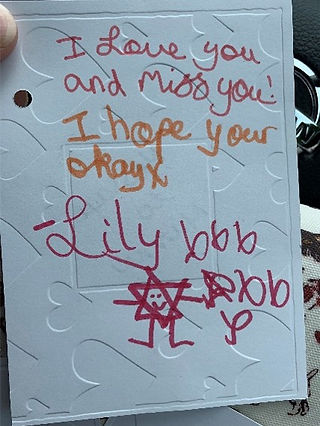
Card from Lily to her mum 
Card from Bobby to his mum
(Names and photos shared with full consent of legal guardian)